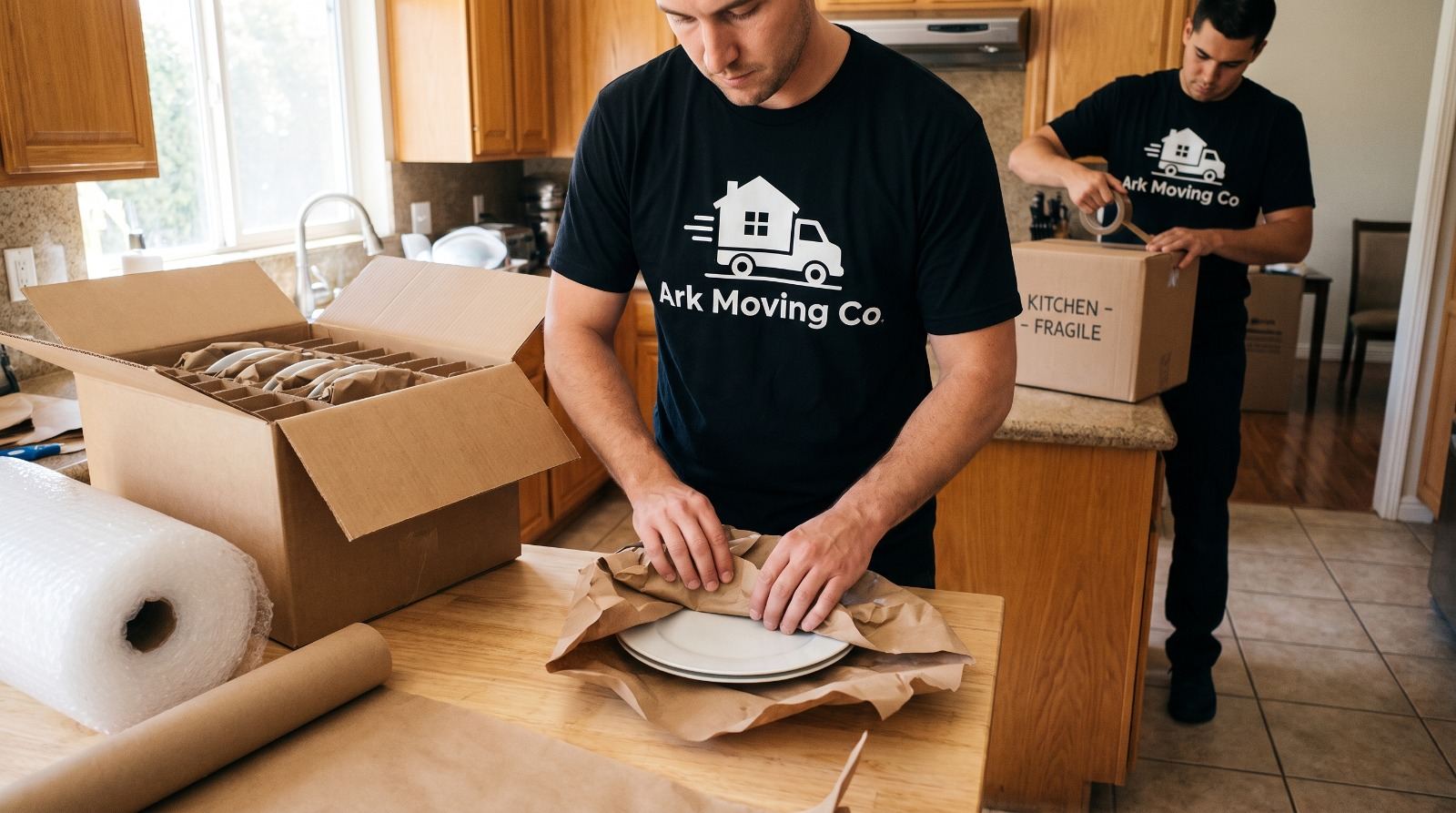
At Ark Moving Co, we help families and businesses move throughout Southern California, and we see the same packing mistakes again and again. Based on our hands-on moving experience, these are the packing methods we recommend to our customers before moving day.
1. Use Small Boxes for Dishes, Glassware, and Other Fragile Items
One of the most important packing rules is simple:
Do not put heavy, fragile kitchen items into large boxes.
Plates, bowls, glasses, mugs, and other breakable kitchen items should usually be packed in small, sturdy moving boxes or appropriate dish boxes.
There are two main reasons.
First, dishes and glassware become surprisingly heavy when packed together. A large box filled with dishes can become difficult to lift and puts more pressure on the bottom of the box.
Second, a large box creates more empty space. If fragile items are not packed tightly and securely, they can shift while the moving truck is driving, increasing the possibility of damage.
Wrap fragile items individually with packing paper, bubble wrap, or another suitable protective material. Add cushioning to the bottom of the box and fill empty spaces so the contents cannot move freely.
Glasses and other fragile items should also be individually protected and packed tightly enough that they cannot move around inside the box.
Before closing the box, gently check for movement. If you can hear or feel items shifting inside, add more packing paper or cushioning.
2. Books Belong in Small Boxes Too
Another item that should almost always go into a small box is books.
As we sometimes tell our customers at Ark Moving Co:
Knowledge has weight — and a box full of knowledge gets heavy very quickly.
One book may not weigh much, but 30 or 40 books together can create an extremely heavy box.
Putting books into a large moving box can cause several problems:
- The box may become too heavy to safely carry.
- The cardboard bottom can become stressed or damaged.
- An overloaded box is harder to stack and handle.
- Extremely heavy boxes can slow down the moving process.
Use small boxes for books and try to keep the weight manageable for one person.
A good packing rule to remember is:
The heavier the item, the smaller the box. The lighter and bulkier the item, the larger the box.
3. What Should Go in Medium Moving Boxes?
Medium boxes are the most versatile boxes during a household move.
They work well for many everyday household items that are not extremely heavy or unusually fragile.
Good items for medium boxes may include:
- Clothing
- Shoes
- Toys
- Small household decorations
- Office supplies
- Plastic kitchen items
- Non-breakable kitchenware
- Small appliances when properly protected
- Bathroom items
- Pantry items that are safe to transport
Even with a medium box, pay attention to weight.
Just because there is still room inside the box does not mean you need to keep filling it.
If the box is becoming difficult to lift, stop adding heavy items and fill the remaining space with something lighter.
4. Save Large Boxes for Lightweight Items
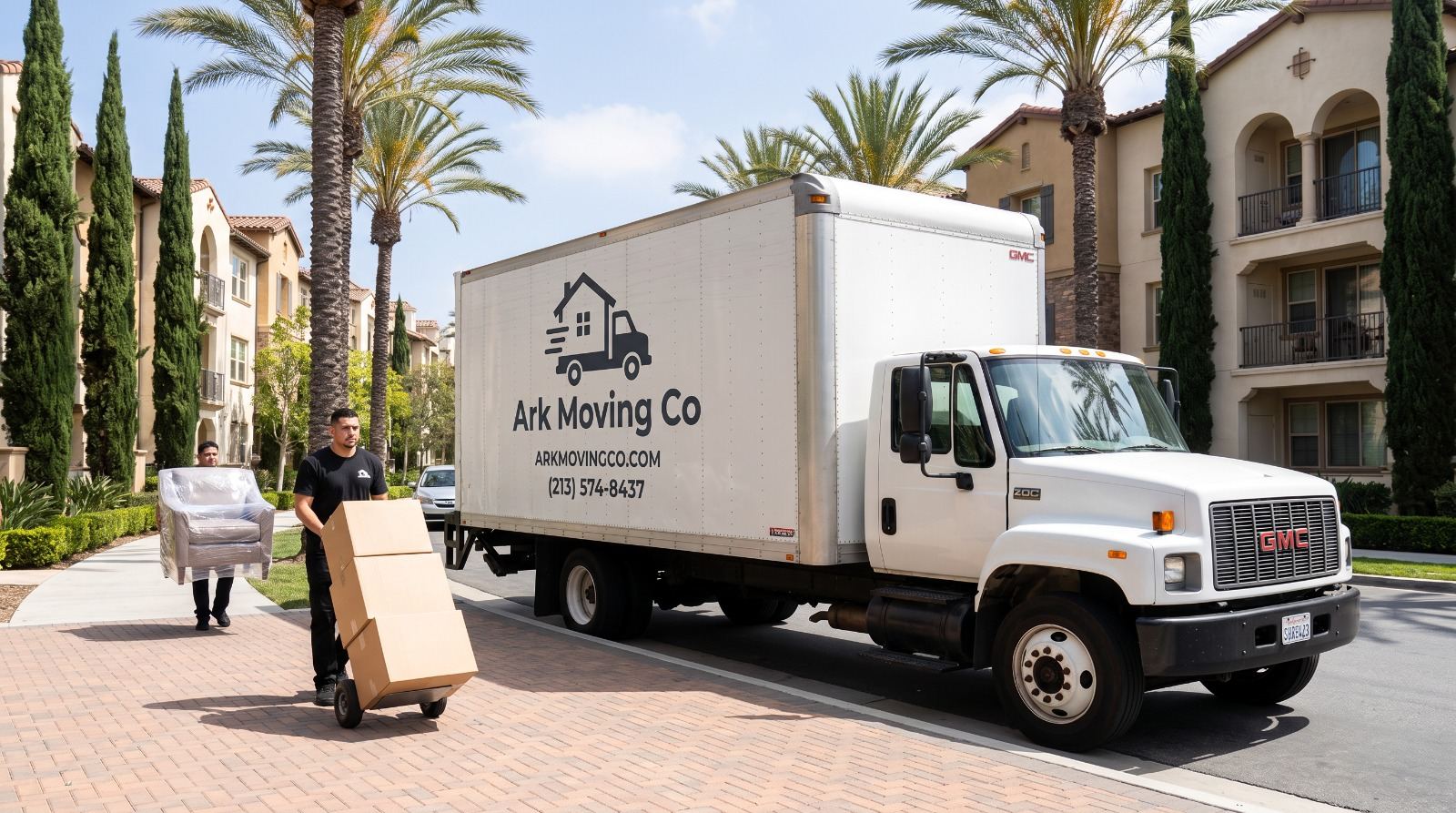
A common packing mistake is using a large box because you want to fit as much as possible into one container.
That does not necessarily make a move easier.
At Ark Moving Co, we recommend using large moving boxes primarily for lightweight, bulky belongings, such as:
- Pillows
- Comforters
- Clothes
- Blankets
- Bed sheets
- Towels
- Lightweight clothing
- Stuffed animals
- Lightweight toys
- Other soft household items
These items take up a lot of space but do not add much weight.
This makes a large box easier to carry and reduces the chance of the bottom breaking because it has been overloaded.
Large boxes filled with books, dishes, canned goods, or other dense items can become extremely heavy. Avoid this whenever possible.
5. Never Leave Too Much Empty Space Inside a Box
A properly packed moving box should be reasonably full without being overloaded.
When there is too much empty space, items can shift every time the truck accelerates, stops, turns, or travels over an uneven road.
Fill empty areas with appropriate cushioning such as:
- Packing paper
- Bubble wrap
- Towels
- Soft clothing
- Other clean protective packing material
The goal is not to force everything tightly together. The goal is to prevent unnecessary movement inside the box.
Professional packing is not only about protecting an item from the outside. It is also about controlling what happens inside the box while the truck is moving.
6. Tape Your Moving Boxes Properly
Buying a good box is only half of the job. It also needs to be properly sealed.
Before packing a box, make sure the bottom is securely taped.
For heavier boxes, reinforce the bottom with additional packing tape.
When applying tape, do not simply place it lightly against the cardboard. Run your hand firmly over the tape so the adhesive makes good contact with the box.
Pay particular attention to the ends and edges.
If tape is loosely applied or does not fully adhere to the cardboard, it can begin lifting during handling. A box that opens from the bottom during a move can damage everything inside.
After packing, securely tape the top as well.
A tape dispenser can make this process faster and usually helps apply packing tape more consistently.
7. Label Every Box
Labeling boxes may take a few extra seconds while you are packing, but it can save a significant amount of time on moving day and during unpacking.
At minimum, write the destination room on the top and at least one side of every box.
For example:
KITCHEN — FRAGILE — GLASSWARE
orMASTER BEDROOM — CLOTHES
For boxes containing breakable items, clearly write FRAGILE.
We also recommend labeling the side of the box, not only the top. When boxes are stacked inside a moving truck or inside your new home, the top label may no longer be visible.
Clear labeling also helps your moving crew know where each box belongs when unloading at your new home.
8. Keep Boxes From Different Rooms Organized
Whenever possible, avoid mixing unrelated items from several rooms into the same box.
Keeping kitchen items with kitchen items, bedroom items with bedroom items, and office items with office items makes both loading and unpacking more organized.
It also allows movers to place each box directly into the correct room instead of leaving you with a large group of mystery boxes in the garage or living room.
If you want an even easier system, use a different marker color or colored sticker for each room.
9. Prepare Dressers, Cabinets, and Furniture Before Moving Day
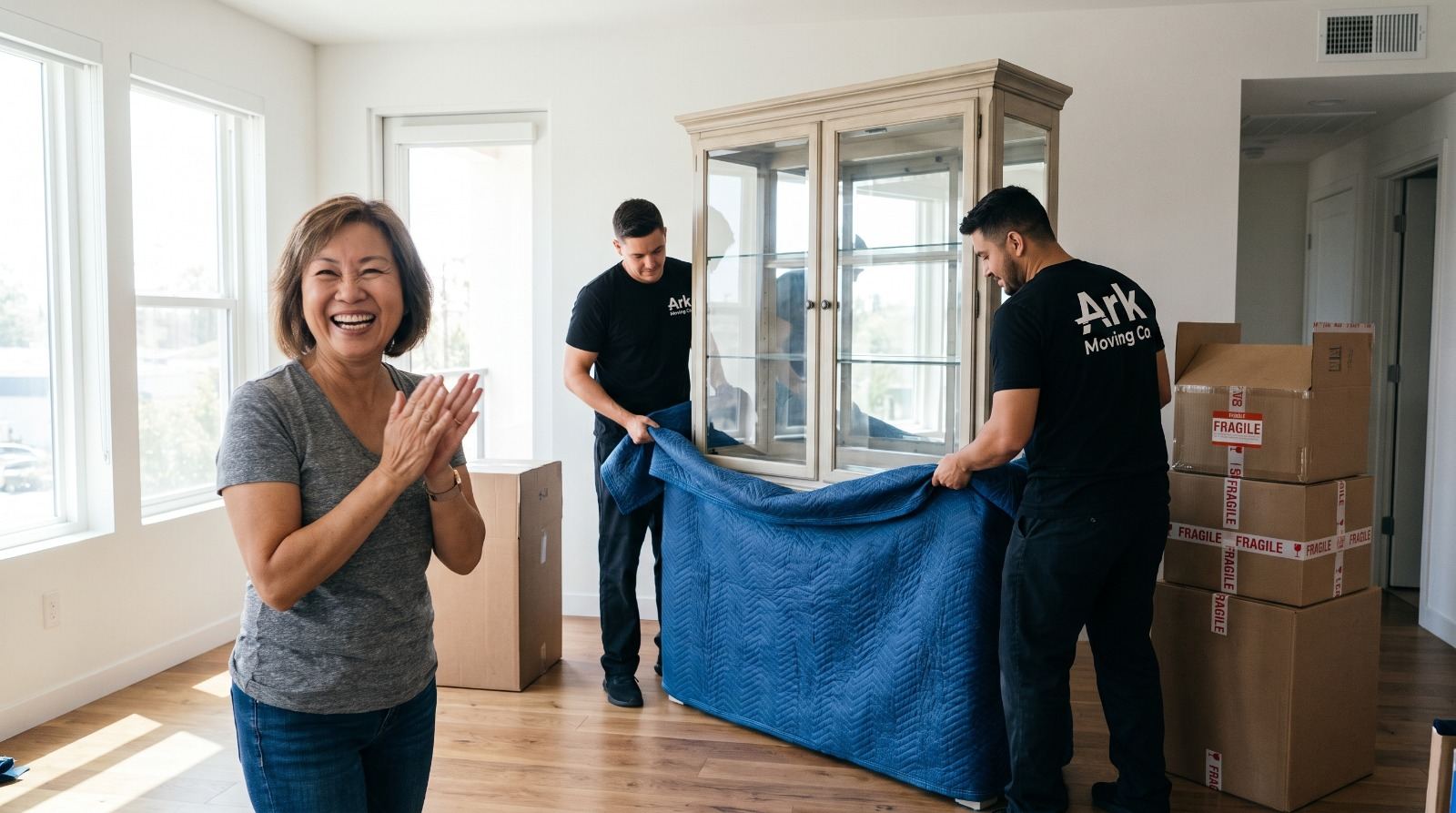
Packing boxes is only part of getting ready for your move.
Furniture also needs preparation.
Before your movers arrive, we generally recommend emptying dressers, filing cabinets, cabinets, shelving units, and similar furniture, especially when the contents are heavy, loose, fragile, or can shift while the furniture is being moved.
There is a simple reason:
Furniture is easier and safer to handle when unnecessary weight has been removed.
A dresser that is already heavy when empty becomes significantly harder to maneuver when every drawer is filled with clothing or household items.
Heavy contents can also put additional stress on drawers, slides, shelves, and the furniture frame while the piece is being tilted, carried, or transported.
Remove loose items and pack them separately.
Removable shelves should also be secured or removed when appropriate. Doors and drawers need to remain closed during transportation so they do not swing or slide open while the furniture is being carried.
Your moving crew can determine the safest way to protect and transport each particular piece of furniture on moving day.
10. Do Not Pack Important Items You Will Need Immediately
Some belongings should stay with you rather than disappearing somewhere inside the moving truck.
Prepare a separate moving-day essentials bag or box.
| Category | Items |
|---|---|
| Documents & Valuables | Identification, important documents, prescription medication, keys, wallets |
| Electronics | Phone chargers, laptop |
| Personal Care | Basic toiletries, toilet paper, a change of clothes |
| Household | Basic cleaning supplies, snacks and water |
| Family & Pets | Baby supplies when applicable, pet necessities |
| First Night | Anything you will need your first night |
If you are moving locally within Southern California, you may reach your new home quickly, but you still do not want to search through 40 moving boxes just to find a phone charger or toothbrush.
11. Be Careful With Liquids
Liquids require extra attention because one leaking bottle can damage several other items.
Before packing shampoo, cleaning products, cooking liquids, or similar items, make sure each container is completely closed.
When appropriate, place liquid containers inside sealed plastic bags before putting them into a box.
Keep them upright and separate them from items that could easily be damaged by moisture.
Certain hazardous, flammable, explosive, or restricted materials should not be loaded onto a moving truck. Ask your moving company in advance if you are unsure about a particular product.
12. Use Specialty Boxes When They Make Sense
Standard small, medium, and large boxes will handle much of a typical household move, but some belongings deserve specialized packaging.
Consider specialty boxes or containers for:
- Wardrobe clothing: Wardrobe boxes allow hanging clothes to remain on hangers.
- Televisions: A properly sized TV box offers much better protection than trying to improvise with a regular box.
- Mirrors and artwork: Picture or mirror boxes can help protect frames, glass, and corners.
- Important files: File boxes keep paperwork organized and manageable.
- Valuable dishes and glassware: Heavy-duty dish boxes or boxes with dividers can provide additional protection.
Spending a little more on the correct box for an expensive or fragile item can be much less expensive than replacing that item after a move.
13. Where Can You Buy Moving Boxes?
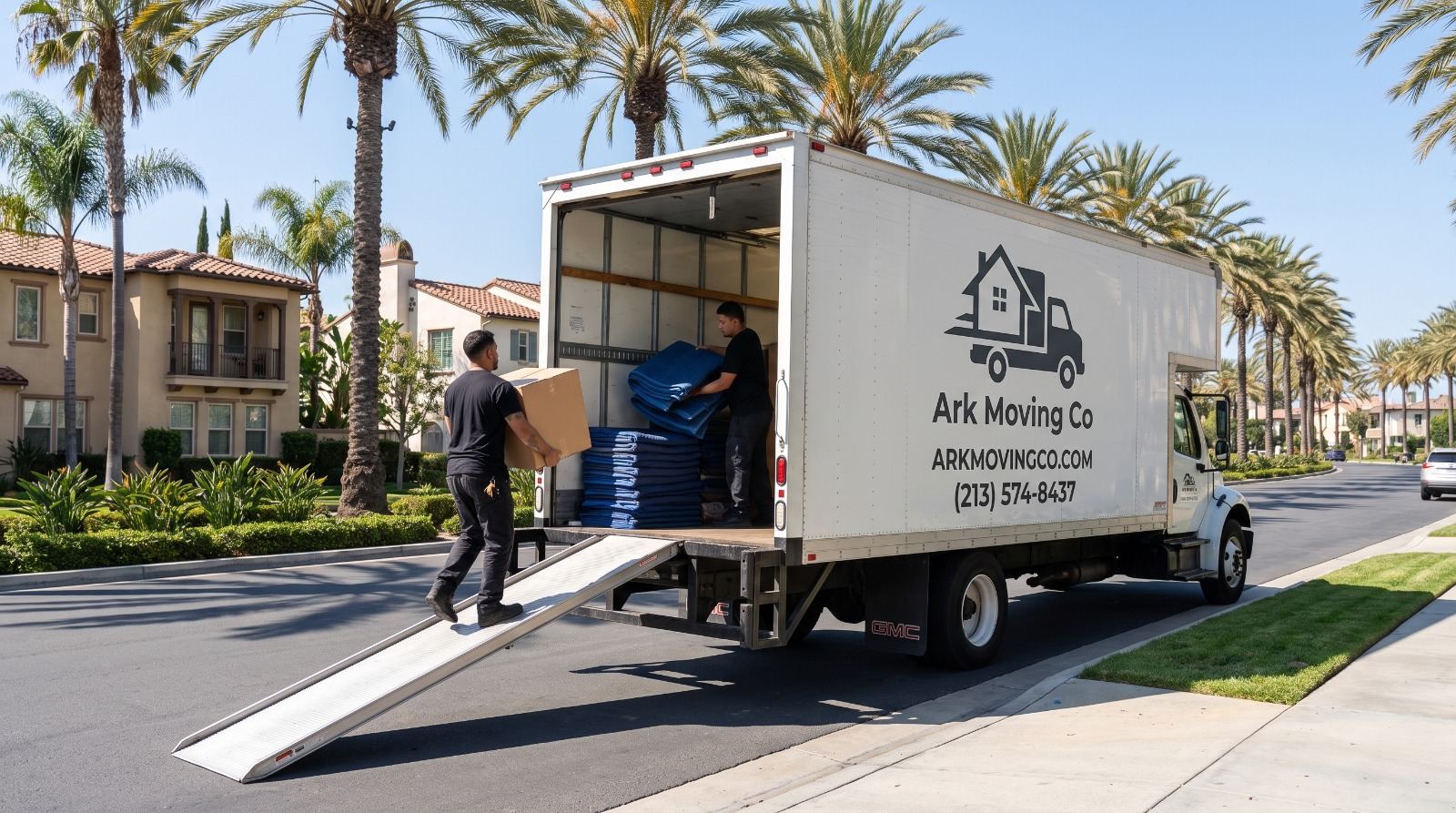
Moving boxes and packing supplies are available from many home-improvement and moving-supply stores throughout Southern California.
One convenient option we often mention to customers is The Home Depot and U-Haul, where you can usually find small, medium, large, heavy-duty, wardrobe, dish, picture, and TV moving boxes along with packing paper, bubble wrap, tape, and other supplies.
Home Depot and U-Haul currently states that qualifying unused moving boxes can be returned with a receipt, subject to its return terms. This can be useful because estimating exactly how many boxes you need before a move is difficult.
It is generally better to have a few extra boxes available than to discover at 10:00 p.m. the night before your move that you still have an entire kitchen cabinet left to pack.
14. Start Packing Before the Night Before Your Move
One of the biggest mistakes we see is waiting until the last minute.
A customer may think:
"I only have a few things left. I'll finish tomorrow morning."
But those final items often take much longer than expected.
Start with belongings you do not use every day:
- Seasonal clothing
- Decorations
- Books
- Storage areas
- Extra dishes
- Guest rooms
- Garage items that can safely be packed
Leave your everyday essentials until the end.
The kitchen often requires more packing time than people expect because there are many small, fragile, and irregularly shaped items.
The goal should be simple:
When your movers arrive, the home should be ready to move.
Movers can work much more efficiently when boxes are packed, closed, labeled, and ready to be loaded instead of waiting while last-minute items are being placed into boxes.
15. Do Not Overpack Your Boxes
A strong moving box still has limits.
If the top of the box cannot close normally, remove some items.
If the sides are bulging significantly, repack it.
If one person cannot reasonably lift it, consider dividing the contents between two boxes.
A good moving box should be:
Closed. Taped. Stable. Stackable. Manageable to lift.
Those five characteristics make loading a moving truck safer and more efficient.
16. A Simple Packing Rule From Ark Moving Co
After helping customers move throughout Southern California, we recommend remembering this simple system:
And regardless of box size:
Wrap it. Secure it. Fill empty space. Tape it well. Label it clearly.
Good packing does not need to be complicated. But it can take all day. It simply needs to be done with the transportation process in mind.
Your belongings are not going to remain sitting on the floor after you close the box. They will be lifted, carried, placed on a moving truck, transported through Southern California streets and freeways, unloaded, carried again, and finally placed in your new home.
Pack for that entire journey.
Getting Ready for Your Southern California Move
Whether you are moving from an apartment, condominium, townhouse, house, office, or storage unit, preparing before moving day can make the entire experience smoother.
At Ark Moving Co, we believe a successful move begins before the truck arrives.
Proper packing helps protect your belongings, makes boxes easier to handle, improves loading efficiency, and makes unpacking at your new home much more organized.
If you are preparing for a move in Orange County, Los Angeles County, Riverside County or another Southern California community, use these packing tips as your checklist before moving day.
And if you are unsure how a particular item should be packed, ask your moving company before moving day rather than taking an unnecessary risk.
Ark Moving Co — practical moving advice based on real moving experience in Southern California.
If you do not have the time or simply do not want to handle the packing yourself, most professional moving companies can provide full-service packing, often at the same hourly labor rate, although packing an entire home may take a full day or more depending on the size of the home and the amount of belongings. At Ark Moving Co, as with many moving companies, if boxes are packed by the customer or another third party, we generally cannot take responsibility for damage to items inside those boxes because we did not control how they were wrapped, protected, or packed; when our team performs the packing using proper materials and sufficient time, we can better ensure that each item is packed according to professional moving standards, subject to the terms of the moving agreement and applicable law.
For more details on professional furniture wrapping and protection, explore our Furniture Protection & Wrapping Playbook. For pricing details, see our California Moving Costs Guide.
Frequently Asked Questions: Packing Tips for Moving
What size box should I use for dishes and glassware?
Dishes, glassware, and other heavy, breakable kitchen items should be packed in small, sturdy moving boxes. Small boxes limit weight, prevent bottom blowouts, and reduce empty space where fragile items can shift during transit.
Can I use large boxes for books?
We do not recommend it. Books are surprisingly heavy when packed together. A large box filled with books can become too heavy to carry safely and may stress the cardboard bottom. Use small boxes for books and keep the weight manageable for one person.
What should I pack in a moving day essentials bag?
Keep identification, prescription medications, phone chargers, keys, wallets, basic toiletries, toilet paper, a change of clothes, snacks, water, and anything you will need your first night at the new home.
How do I prevent items from breaking inside a box?
Wrap fragile items individually with packing paper or bubble wrap. Add cushioning to the bottom of the box and fill all empty space so contents cannot shift during transport. Before closing the box, check for movement and add more packing material if needed.
Should I empty dressers and cabinets before movers arrive?
Yes, we recommend emptying dressers, filing cabinets, and shelving units before moving day. Removing heavy, loose, or fragile contents makes furniture easier and safer to carry and reduces stress on drawers and frames during transport.
Does Ark Moving Co offer full-service packing?
Yes. Our crews can handle complete packing at the same hourly labor rate. When our team performs the packing, we can better ensure each item is packed according to professional moving standards and take responsibility for proper protection.
Need Help Packing for Your Move?
Our experienced crew can handle your packing, wrapping, and loading with commercial-grade materials and zero stress.